Introduction
What is The Burnt City?
The Burnt City was a large-scale, immersive, contemporary dance-based play produced by British theatre company Punchdrunk, performed at One Cartridge Place (a converted former military museum and arsenal, consisting of two conjoined buildings, based in Woolwich), from 19th March 2022 until it’s final performance on 24th September 2023.


The play draws from a multitude of theatrical, literary and cinematic references and aesthetics, with the core story being based on ‘Agamemnon’ by Aeschylus (specifically Ted Hughes’ edition of ‘The Oresteia’), and ‘Hecuba’ by Euripides. However, the play also pays tribute stylistically and thematically to both Fritz Lang’s 1927 German Expressionist sci-fi epic Metropolis, as well as Philip K. Dick’s 1968 dystopian classic novel Do Androids Dream of Electric Sheep?.
Agamemnon tells of the murder of the titular King of the Greeks, at the hands of his vengeful wife Queen Clytemnestra and her equally embittered lover Aegisthus, as revenge for his sacrificing of her daughter Iphigenia, as a means of claiming victory over the long-standing war to win the city of Troy.
Similarly, Hecuba details the extreme grief of the titular Queen of (a now fallen) Troy at the tragic deaths of her two children, Polyxena and Polydorus, (with the latter being murdered at the hands of the very man entrusted with his safekeeping – the treacherous Polymestor) – upon discovery of his betrayal, Hecuba enacts her revenge by blinding him.
The play takes place across two opposing cities surrounding the Trojan War, with events spanning across the two buildings, with one representing the fallen Troy, and the other the homeland of the invading Greeks – Mycenae. Interestingly though, there is also a deep meta-narrative at play throughout The Burnt City, as although on the surface it may appear that the location is relatively straightforward, all is not what it seems…
Throughout the set there are many references to the Ancient Greek depictions of Hell, from the various signage across Troy denoting to Dante’s Inferno, to the more blatant appearances of mythological characters such as Hades, Persephone, Kampe and Hecate, to which it becomes clear to audiences that this is not in fact the ‘real’ Troy, but in actuality a fictionalised (or perhaps restaged) version, enacted by lost souls within The Underworld.


Thematically the show is very much interested in the idea of questioning reality and ones own purpose, as well as the idea of control and accepting a lack of independence over the happenings in a person’s life – this is seen most strongly within the references to the aforementioned works of Fritz Lang and Philip K. Dick. For example, characters such as the seer Laocoön draws heavy inspiration from Metropolis’ Rotwang (the strange, but brilliant inventor), whereas Luba is a direct reference to an android opera singer of the same name in Do Androids Dream of Electric Sheep?. Notably the architecture and décor used throughout Troy harkens to an amalgamation of 1920s Weimar Germany, melding with neon-soaked Chinatown backstreets echoing those of Ridley Scott’s 1982 film adaption of K. Dick’s novel Blade Runner.
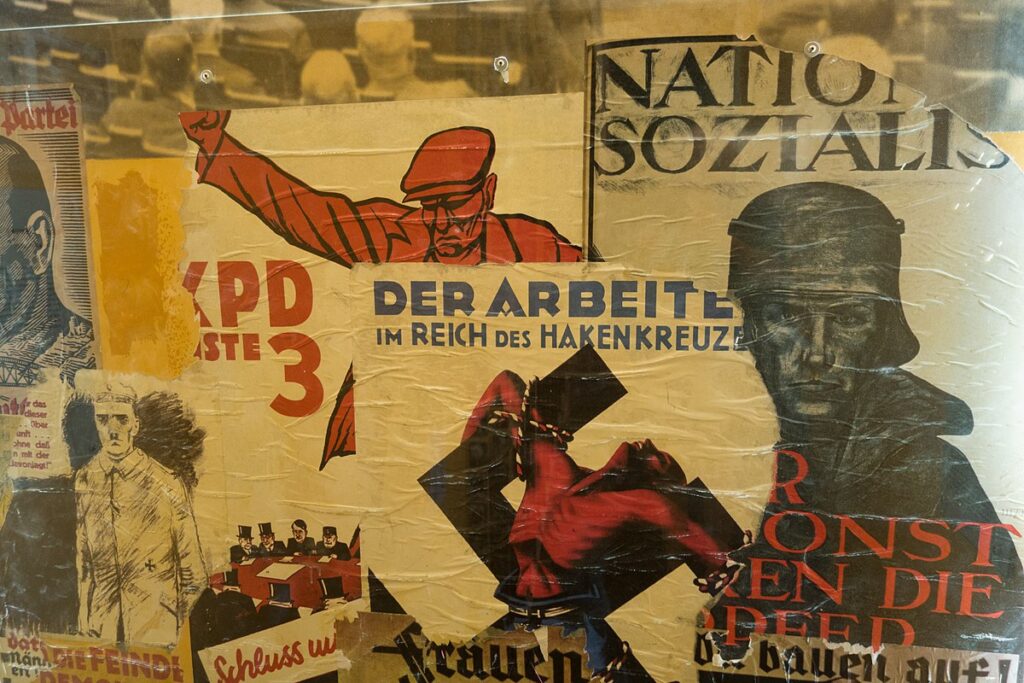


Past the obvious aesthetic influences, Metropolis’ motif of one man’s attempt to maintain complete control over his city, is most clearly present in Hades’ Loop, and in the presence of his vinyl collection. The android references, however, are more changeable and dependant on individual performer variations, with some cast members opting to actively portray their characters with an overt robot-like physicality, and direct quoted references to the source texts; these more blatant suggestions that the inhabitants of The Burnt City are merely programmed androids, although always present, were initially denied by Artistic Directors Felix Barrett and Maxine Doyle, however several performers continued to highlight this possibility. Additionally further references within the set seem to imply the significance of coding and programming taking place within the City, however the lengths to which these prove that the characters are literal robots is still open to interpretation.
A final crucially important influence over the show is that of Béla Bartók’s 1918 opera Bluebeard’s Castle, based on the French folktale of the same name, which tells the story of the recently eloped Judith, who returns to the home of her new husband, the wealthy but ever-mysterious titular Bluebeard. Upon welcoming her home, Bluebeard promises Judith everything she could ever need or want, and asks nothing more than that she love him, and ask no questions, but when he demands that the castle doors remain locked, Judith grows distrustful and ventures to unlock the secrets he has kept hidden from her. Despite his protestations, Judith uncovers a hoard of dark and bloodied rooms behind a number of doors within the castle, eventually discovering that the seventh and final door houses her husband’s three previous wives all trapped and cursed to remain there forever as wives of Dawn, Midday and Dusk. The opera ends with Judith joining the trio, as the final wife of Night, as Bluebeard is left alone once more. Most notably this story serves as a template for Persephone’s loop, and in her journey to unlock the secrets to the City with the various keys she acquires from Hades, but additionally Bartók’s music itself features heavily throughout the show.
Most notably this story serves as a template for Persephone’s Loop, and in her journey to unlock the secrets to the City with the various keys she acquires from Hades, but additionally Bartók’s music itself features heavily throughout the show.


How does The Burnt City work?
As with most Punchdrunk productions, The Burnt City lasts approximately 3 hours in length, consisting of a triple loop structure, wherein each character’s individual storyline starts and ends within 1 hour, before repeating a further two times, in what is referred to as a ‘loop’. However it is with this show that Punchdrunk launched a first for their format; the introduction of two characters who run on a time structure independent of all others, allowing them to complete one singular 3 hour loop, as opposed to a thrice repeated one. These two characters are Hades and Persephone – their longer, single loops also serve to demonstrate their growing awareness of the looping nature of their surroundings (unlike every other character who seemingly ‘resets’ and forgets the previous loop, after each hour), furthering the show’s meta-narrative exploring the in-world character’s awareness of the fact that they are parts within a show, and are being observed by an audience at all times.
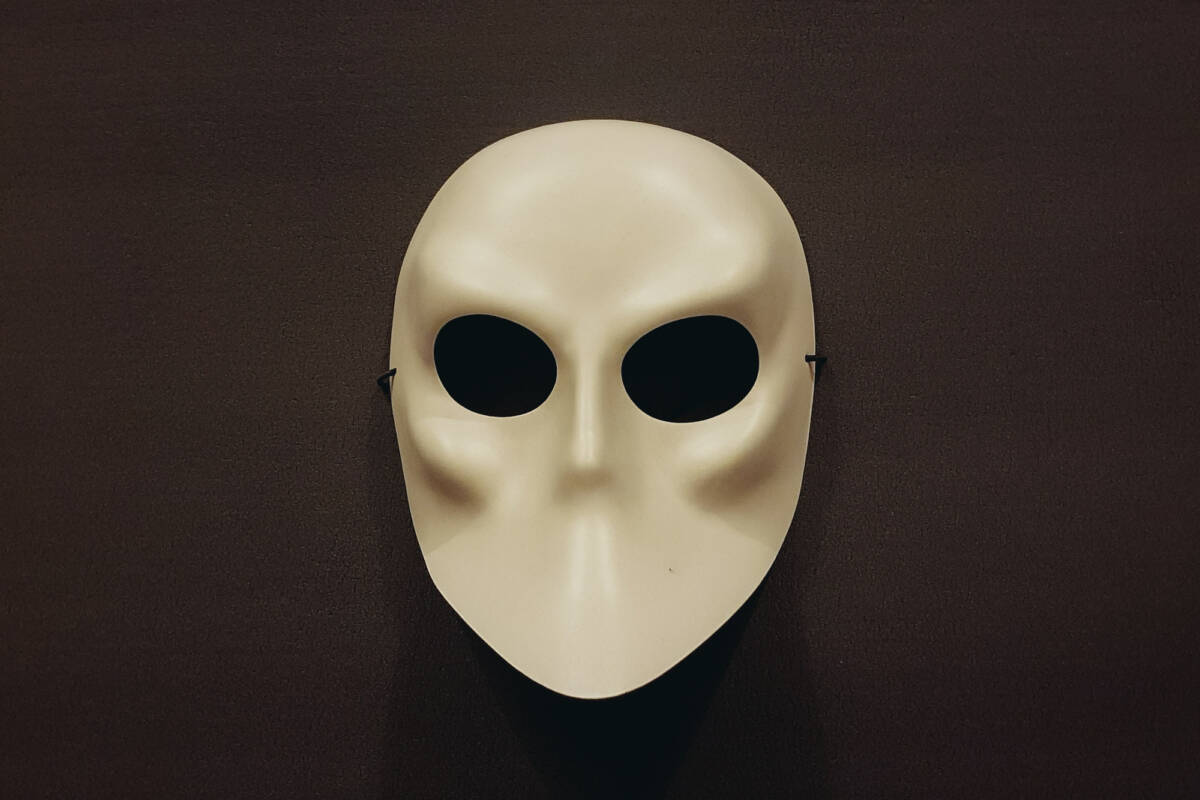
The role of the audience member (affectionately nicknamed ‘White Masks/WMs’ for the white Venetian-style masks one is required to wear while in the show) is at a glance a straightforward one, required to remain silent when in the space and be largely ignored (or rather unseen) by performers, as though they are simply ghosts passing through the space.
This, however, changes when a character offers a WM a chance to participate in a ‘1:1’ – a secret, interactive scene (typically occurring behind a locked door) performed exclusively for the invited individual, with the intent of revealing additional, and often intimate, information regarding the character involved.
There are some variations of a 1:1, with some scenes involving anywhere from 2-10 invited WMs, and some involving more than one performer to a single WM…
The rules on when a WM can and cannot be seen have become slightly blurred overtime, with many performers straying from the traditional Punchdrunk rule of thumb, stating that characters can become aware of audience members only when they are “drunk, mad, dead, or supernatural”, with many opting to include both scripted and non-scripted moments of interactivity with WMs, ranging from extended meaningful eye contact, to directly conversing with audience members. This has led to many unique performer-specific interactions, leading to an overall more richly detailed, and varied number of potential in-show experiences to be gained from repeat follows.

There are a total of 30 characters within the show, with 16 confined exclusively to Troy, 2 exclusively to Mycenae, and the remaining 12 having loops involving travelling between the two spaces. Each character is divided into one of two categories based on their activity level (labelled as either a travelling or resident character), with most performers taking up one of either category – traditionally resident roles would be considered less dance-heavy, and be played by a performer on their rest days, to avoid exhaustion throughout the show week, however this is not so reliable a definition due to the abundance of technically resident characters with a highly active loop. As a result, characters can also be categorised as active or rest roles, depending on how physically demanding they are to play.
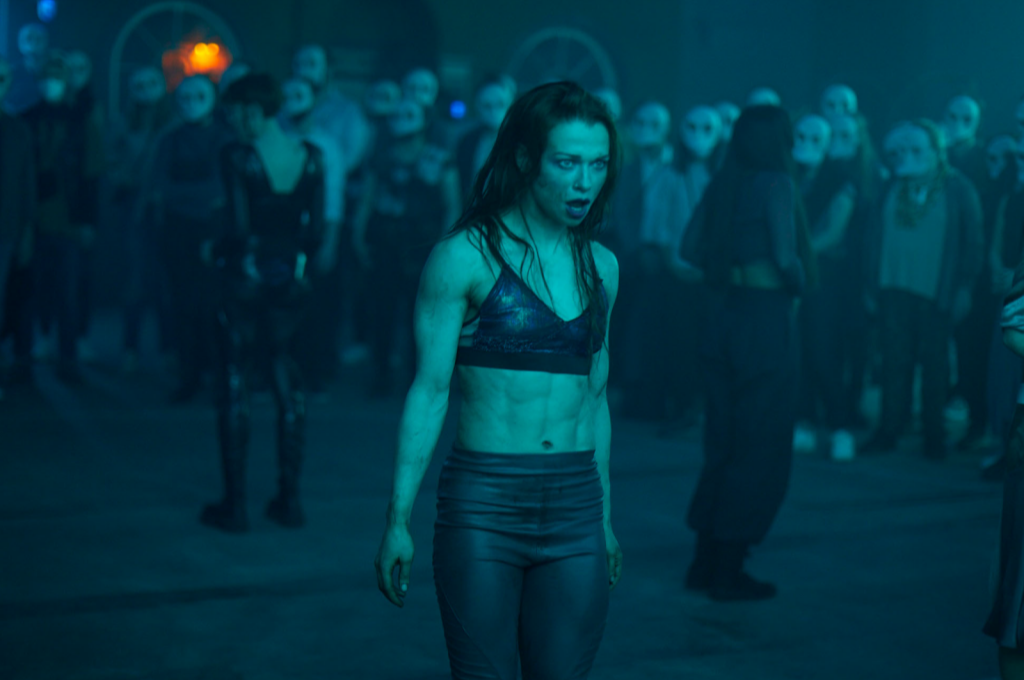
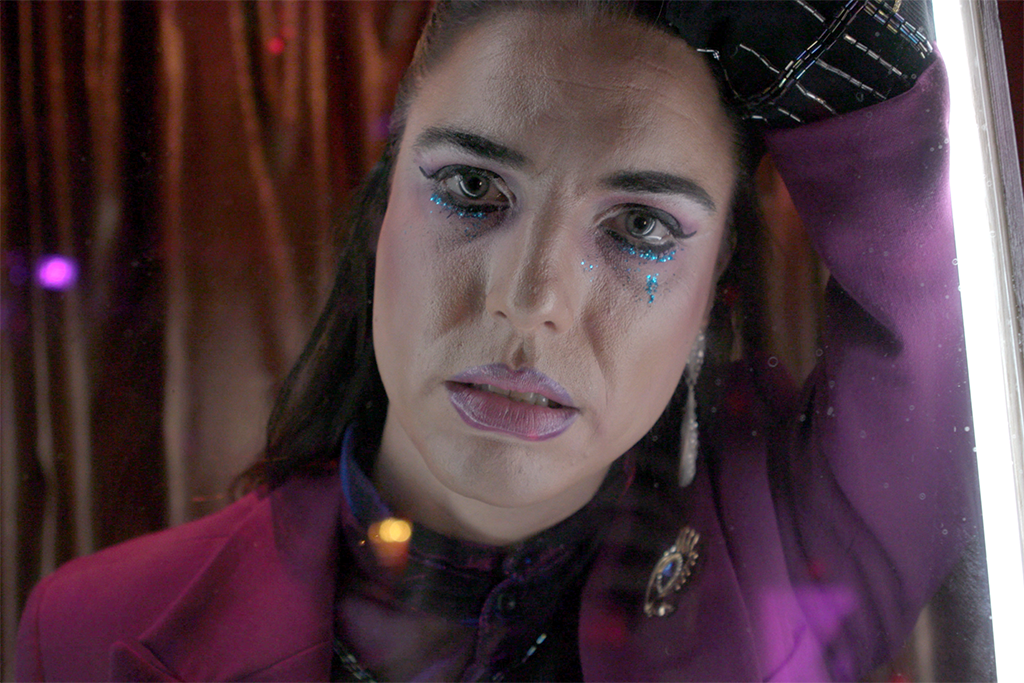
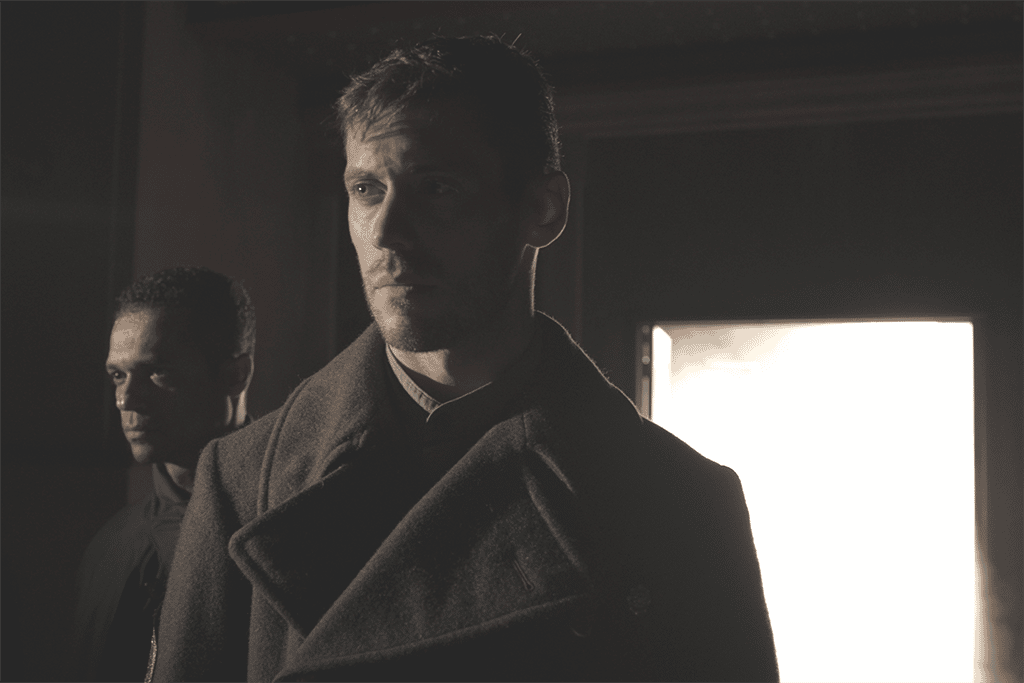
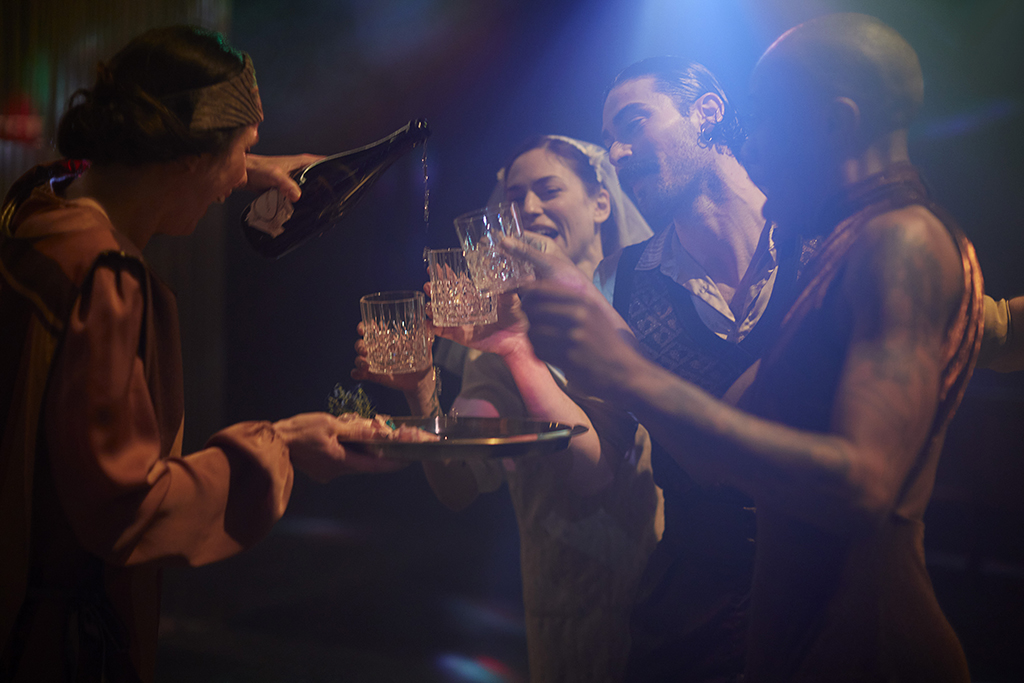
By the final night, the production had hosted over 100 cast members, including 95 core performers and 12 guest musicians, however not every cast member was present for the entirety of the run, with several ending contracts early to pursue other work. The first major contract ended in early January 2023, resulting in a wide-scale cast change across many key roles. The terms C1 and C2 (Cast 1 and Cast 2) are often used to refer to the contracted performers at different points in the run – with C1 referring to the April 2022-January 2023 contract, and C2 referring to January 2023-September 2023.


Across the two buildings, there are approximately 100 rooms in total, across 2 floors, with around 17 of said rooms being secret spaces only available for audiences to view and explore when invited into a specific 1:1 scene with a performer.
Each character’s loop consists of 12 scenes, however the first loop always begins with the 4th scene. For the sake of more cohesive reading, I have started each loop account with the reset, resulting in each scene shifting up a number, by one.
Closing the final scene of each loop, a version of the instrumental ‘You Have The Power’ by Trevor Jones, from the Dark City OST, plays throughout every room in both Troy and Mycenae, signally the ‘reset’ in which every character prepares to begin their loop again.
Teasers & Trailers
Off you go. Don’t look back. Never look back.